For patients living with diabetes, a minor blister or localized scrape on the bottom of the foot can quickly escalate into a limb-threatening medical crisis.
Diabetic Foot Ulcers (DFUs), particularly those located on weight-bearing plantar surfaces, represent one of the most severe chronic complications of the disease.
When a plantar ulcer fails to heal, the risk of developing deep-tissue infection, bone infection (osteomyelitis), and ultimately requiring a lower-extremity amputation increases dramatically. Standard wound dressings and traditional therapeutic shoes frequently fall short of resolving these complex lesions. The breakdown in healing is rarely due to a lack of topical salves; rather, it is a mechanical failure caused by the repetitive, destructive forces of everyday walking on a structurally compromised foot.
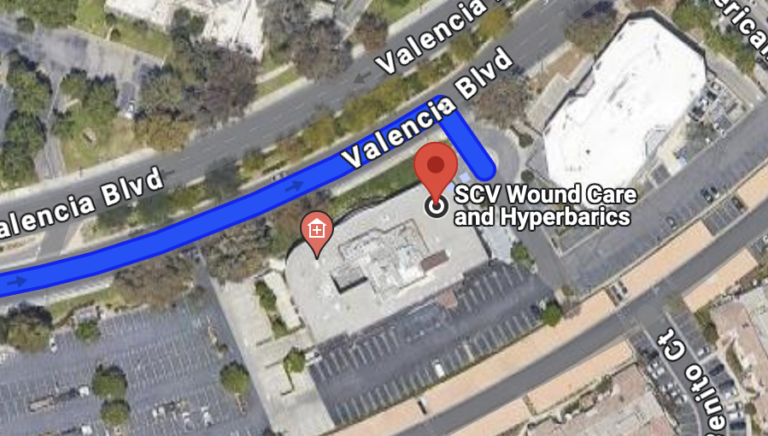
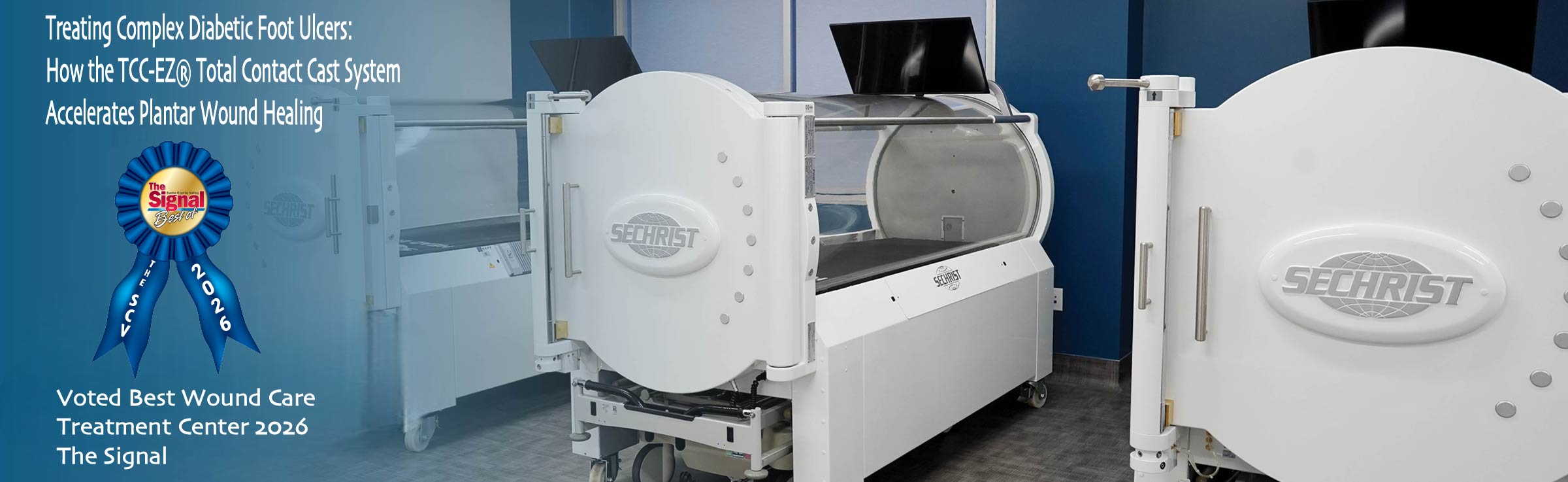
At SCV Wound Care and Hyperbarics, located at 23838 Valencia Blvd, Suite 100, we provide advanced, physician-led clinical protocols designed to interrupt this cycle of tissue degradation right here in the Santa Clarita Valley. Utilizing the state-of-the-art TCC-EZ® Total Contact Casting System, we deliver the gold standard in mechanical offloading. This specialized technology rapidly redistributes plantar pressure, controls shear forces, and creates the definitive biological environment necessary to achieve rapid, predictable wound closure.
The Biomechanical Crisis: Why Plantar Ulcers Fail to Heal
To successfully treat a chronic diabetic foot ulcer, clinicians must address the underlying neurological and structural changes brought on by long-term diabetes. The primary driver behind plantar ulceration is diabetic peripheral neuropathy—the progressive loss of protective sensation in the lower extremities.
When a patient loses sensory feedback, they can no longer feel the repetitive micro-trauma, friction, or elevated pressures occurring during the normal gait cycle. This sensory deficit is frequently compounded by:
Motor Neuropathy: Damage to the intrinsic nerves of the foot that leads to muscle wasting, structural imbalances, and the development of rigid deformities such as claw toes, hammer toes, or a prominent Charcot arthropathy.
Limited Joint Mobility: The non-enzymatic glycosylation of tendons and joint capsules, which stiffens the ankle joint and the first metatarsophalangeal joint, forcing abnormal peak vertical pressures onto the metatarsal heads during forefoot loading.
Every step taken on an unprotected, neuropathic foot acts like a mechanical hammer on the delicate subcutaneous tissues. Even if advanced biologics, growth factors, or specialized cellular dressings are applied to the wound bed, the sheer force of ambulation repeatedly shears apart the newly forming sheets of fragile epithelial cells and delicate capillary buds.
Traditional removable walking boots or orthopedic surgical shoes are notoriously ineffective at resolving this issue. Because they can be easily unstrapped, patients frequently remove them at home to sleep, use the restroom, or relax—meaning the unprotected wound bed continues to suffer mechanical trauma throughout the day.
The Gold Standard Solution: Mechanical Offloading via TCC-EZ®
The term offloading refers to the complete elimination or significant reduction of mechanical stress from a specific geographic area of the foot. In international clinical consensus guidelines, the Total Contact Cast (TCC) is universally recognized as the absolute gold standard for offloading non-infected, non-ischemic plantar DFUs.
The TCC-EZ® System is a modern, engineered advancement over traditional, cumbersome plaster-of-Paris casting methods. It consists of a prefabricated, roll-on woven fiberglass cast mesh integrated with a supportive foam underlayment. When applied by a trained clinician, the material contours precisely to the unique topographical geometry of the patient’s lower leg and plantar foot surface.
The TCC-EZ® system achieves its unmatched healing velocity through three primary mechanical mechanisms:
1. Total Contact Pressure Distribution
By molding perfectly to the entire plantar aspect of the foot—including the longitudinal and transverse arches—the cast expands the total weight-bearing surface area. Instead of forcing 100% of the patient’s body weight onto a localized, ulcerated metatarsal head, the cast redistributes those peak vertical forces away from the wound bed and across the healthy arch, midfoot, and calf.
2. Reduction of Shear Force and Striding Velocity
Horizontal friction, or “shear force,” is just as destructive to healing tissue as vertical pressure. The rigid outer shell of the TCC-EZ® cast locks the ankle and subtalar joints in place, eliminating the internal shifting and rubbing of the foot inside the device during ambulation.
3. Forced Patient Compliance
Because the TCC-EZ® is a non-removable device, it protects the foot 24 hours a day, 7 days a week. It removes the element of patient non-compliance, ensuring that the fragile wound bed is never subjected to unprotected weight-bearing forces during late-night or early-morning trips around the house.
The Clinical Data: What the Peer-Reviewed Science Proves
The integration of rigid total contact casting into comprehensive diabetic limb salvage protocols is supported by a massive body of peer-reviewed, randomized controlled trials and prospective clinical registries.
Superior Healing Velocities: In a classic, landmark randomized controlled trial published in the Diabetes Care journal by the American Diabetes Association, researchers compared traditional contact casting against standard moist wound dressings and accommodative footwear. The data revealed that 90.5% of plantar ulcers healed completely within 42 days in the TCC group, compared to a dismal 31.6% healing rate in the standard care cohort. Furthermore, significantly fewer patients in the casting group developed secondary wound infections. You can access the complete historical trial design via the National Center for Biotechnology Information (NCBI) / NIH PubMed repository
Modern Prefabricated Systems: Real-world clinical performance data evaluating modern roll-on prefabricated casting designs matches the rigorous benchmarks of traditional plaster casts. A large retrospective cohort study tracking complex plantar ulcerations demonstrated an 85.6% overall healing rate, alongside excellent patient device tolerance and a significant reduction in required clinical application time. To read the statistical data regarding iatrogenic safety profiles and limb salvage rates, view the study on the National Library of Medicine / NIH PubMed Database.
Comprehensive Meta-Analysis Conclusions: A massive systematic review and meta-analysis comparing non-removable total contact casts directly against standard removable walking boots and therapeutic footwear confirmed that TCC interventions consistently result in significantly higher overall healing percentages and vastly shorter median times to complete wound closure. Review the aggregate clinical consensus and risk ratios on the National Institutes of Health PMC Free Journal Archive.
What to Expect During Your TCC-EZ® Treatment Plan
At SCV Wound Care and Hyperbarics, our priority is ensuring your advanced wound care plan is safe, efficient, and tailored to your lifestyle. The application of a TCC-EZ® cast is a streamlined, pain-free outpatient procedure performed right in our Valencia examination rooms.
The Application Process
Our clinical team first cleanses, debrides, and applies a primary protective dressing to your plantar ulcer. Next, a specialized protective cotton stocking and protective foam padding are meticulously placed over the bony prominences of your ankle and shin. The TCC-EZ® fiberglass sleeve is then rolled smoothly from the toes up to just below the knee. The material conforms rapidly to your leg structure and cures completely within a matter of minutes, allowing you to walk out of the clinic on a specialized woven outer boot immediately.
Ongoing Clinical Monitoring
Because your safety is paramount, your cast is not a permanent fixture. You will return to our office on Valencia Blvd every 7 days for a routine cast change. During these brief weekly appointments, our medical staff will safely remove the fiberglass shell, re-evaluate the wound dimensions, perform any necessary sharp debridement, document your healing velocity, and apply a fresh, clean TCC-EZ® cast. This cycle continues until complete, 100% skin re-epithelialization is achieved.
Local, Advanced Diabetic Limb Salvage in the Santa Clarita Valley
Managing a complex, non-healing diabetic foot ulcer requires frequent, highly specialized medical appointments. For residents of the Santa Clarita Valley, driving into downtown Los Angeles or enduring long freeway commutes for weekly advanced wound care adds unnecessary physical stress and administrative friction to an already critical medical situation.
SCV Wound Care and Hyperbarics brings world-class, hospital-grade limb salvage capabilities directly to your community. Our clinical facility serves patients throughout the entire Santa Clarita region, providing accessible, neighborhood-based medical solutions to families living in:
Valencia
Stevenson Ranch
Saugus
Newhall
Canyon Country
Castaic
Acton
Our team works directly alongside your treating podiatrist, primary care physician, endocrinologist, or vascular surgeon to coordinate a unified defensive plan against diabetic complications, ensuring all insurance authorizations, custom cast modifications, and clinical updates are handled efficiently.
Protect Your Mobility: Schedule a Consultation Today
A chronic plantar diabetic ulcer is a progressive wound that demands immediate, aggressive, and evidence-based mechanical intervention. If you or a loved one are living with diabetes and have noticed a non-healing sore, calloused area, or draining wound on the bottom of your foot, do not wait for infection or severe complications to take root.
Contact our specialist medical team today to schedule a comprehensive lower-extremity wound evaluation. Let us help you protect your mobility, accelerate your healing velocity, and safeguard your health using the industry-leading power of the TCC-EZ® system.
SCV Wound Care and Hyperbarics
23838 Valencia Blvd, Suite 100, Valencia, CA
Explore our complete range of advanced limb-salvage modalities and view our clinical facility artwork at scvwoundcare.com.