For many cancer survivors, the successful completion of radiation therapy is a milestone worth celebrating. However, for a significant subset of patients, the life-saving treatment can lead to complications that manifest months or even years later. One of the most challenging conditions we treat at SCV Wound Care and Hyperbarics is Radiation-Induced Hemorrhagic Cystitis (RIHC).
Radiation cystitis is a progressive, chronic condition characterized by damage to the bladder’s mucosal lining and vasculature following pelvic irradiation. While modern oncology has made great strides in precision targeting, the surrounding healthy tissues, such as the bladder, often sustain unavoidable ‘collateral’ damage. This leads to chronic inflammation, scarring, and the hallmark symptom that brings most patients to our clinic: hematuria (blood in the urine).
The Pathophysiology of Radiation Injury
To understand why Hyperbaric Oxygen Therapy (HBOT) is effective, one must first understand what radiation does to the body at a cellular level. Radiation therapy works by destroying the DNA of cancer cells, but it also impacts the small blood vessels (microvasculature) in the treatment area. This process is known as ‘Endarteritis Obliterans.’
In simpler terms, the small arteries that supply the bladder with oxygen and nutrients become inflamed and eventually narrow or close entirely. This creates a state of chronic hypoxia—a permanent lack of oxygen in the tissue. Starved of oxygen, the tissue cannot maintain its integrity, leading to the development of fragile, abnormal blood vessels that bleed easily. This is why a patient may have been cancer-free for five years, only to suddenly begin seeing blood in their urine.
How Hyperbaric Oxygen Therapy Reverses Radiation Damage
While conservative treatments such as bladder irrigations or instillations may provide temporary relief, they do not address the underlying lack of oxygen. HBOT is unique because it is a systemic treatment that addresses the root cause: tissue hypoxia.
During an HBOT session at our Santa Clarita facility, patients breathe 100% medical-grade oxygen while inside a pressurized chamber (typically at 2.0 atmospheres). This pressure allows oxygen to dissolve directly into the blood plasma, reaching levels up to 20 times higher than normal. This hyper-oxygenated blood travels to the hypoxic bladder tissue, triggering a series of healing responses:
- Angiogenesis: The high levels of oxygen stimulate the growth of new, healthy capillaries. Over a course of 30 to 60 treatments, we are effectively ‘re-vascularizing’ the bladder.
- Collagen Synthesis: Oxygen is a necessary cofactor for fibroblasts to create collagen, which helps repair the damaged bladder wall.
- Stem Cell Mobilization: Research has shown that HBOT can increase the circulation of stem cells, which migrate to damaged areas to facilitate repair.
What the Clinical Data Tells Us
HBOT is not an experimental treatment for radiation cystitis; it is a globally recognized, evidence-based standard of care. Clinical studies, including a notable narrative review by Dieu & Heinsimer (2022), consistently demonstrate that HBOT is highly effective for refractory radiation-induced hemorrhagic cystitis. Most studies report success rates exceeding 75%, with many patients achieving complete and lasting resolution of their hematuria.
Expert Care in the Santa Clarita Valley
Consistency is the key to successful HBOT outcomes. A standard course for radiation injury typically requires daily treatments (Monday through Friday) for several weeks. In the past, patients in Santa Clarita, Valencia, and Saugus had to navigate the 405 or 5 freeways to reach specialized centers in Los Angeles.
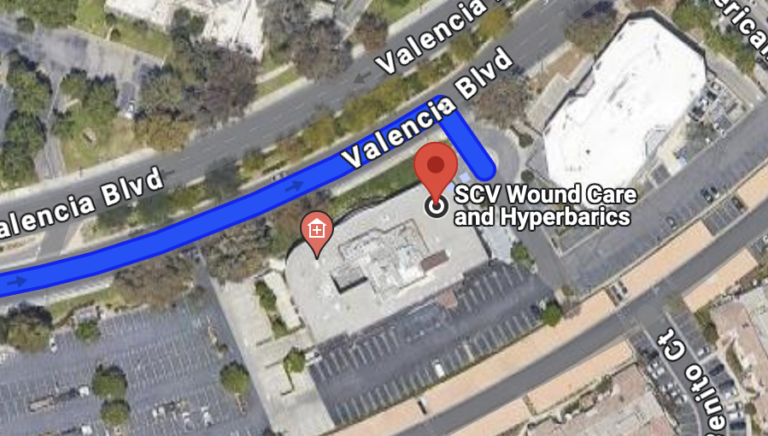
At SCV Wound Care and Hyperbarics, we provide that same high-level, hospital-grade technology right in your backyard. Our facility is physician-owned and operated, ensuring that every patient receives a personalized treatment plan tailored to their specific oncological history and current symptoms. We work in tandem with your urologist to ensure a seamless transition of care.
Frequently Asked Questions: What to Expect
Is the treatment painful?
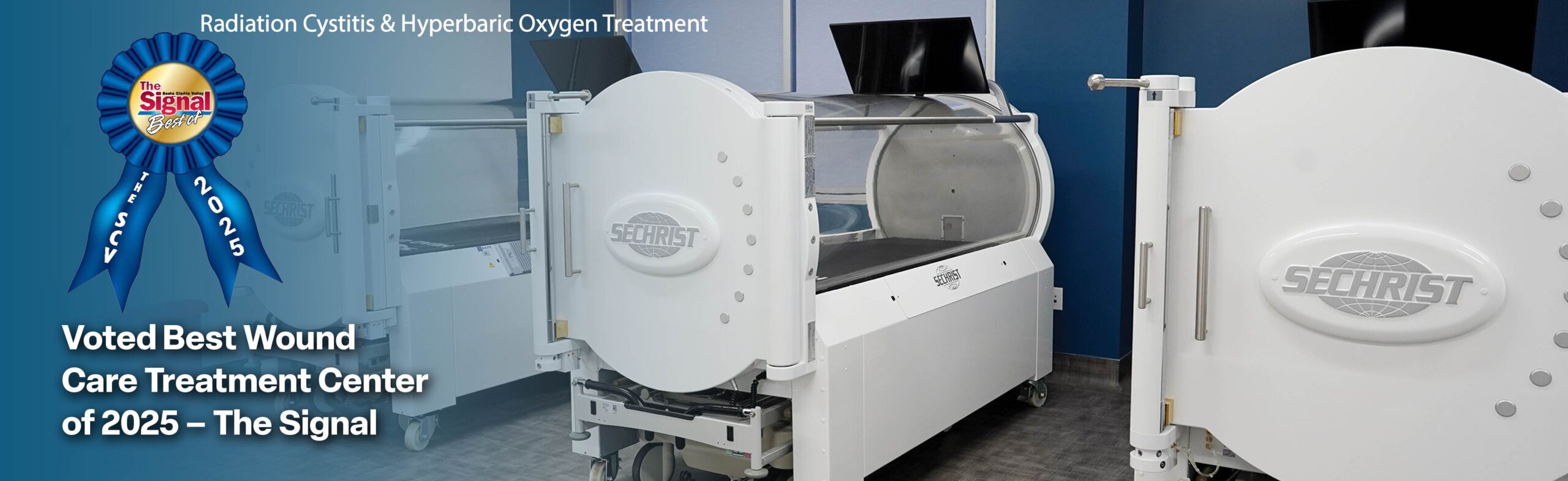
HBOT has a very low side-effect profile. Most patients find their sessions in our Sechrist chambers to be quite relaxing, often watching a movie or napping during treatment. The only sensation most patients experience is a feeling of fullness in the ears, similar to what you feel when a plane is landing. Our staff is highly trained in “ear clearing” techniques to ensure you are comfortable throughout the process.
How long does the treatment take?
The total procedural duration for a Hyperbaric Oxygen (HBO) session is 110 minutes. This protocol ensures a full 90-minute therapeutic plateau at the prescribed atmosphere, preceded by a 10-minute compression phase and followed by a 10-minute decompression phase. This structured timing allows for optimal pressure equalization and patient safety.
When Should You Consider HBOT?
If you have a history of pelvic radiation and are experiencing any degree of hematuria, it is vital to act quickly. While minor bleeding may seem manageable, radiation injury is progressive. Early intervention with HBOT can prevent more severe complications, such as bladder contractures or the need for more invasive surgical procedures.
At SCV Wound Care and Hyperbarics, our mission is to help cancer survivors move past the side effects of their treatment and reclaim their quality of life. Healing is possible, even years after your last radiation session.
Regain Your Quality of Life
Schedule Your Consultation Today
Visit: scvwoundcare.com | Call: (661) 425-5000