For patients living with non-healing lower-extremity wounds, pressure injuries, or post-surgical wound complications, watching an open lesion linger week after week is both frustrating and clinically dangerous. When a wound fails to demonstrate measurable surface area reduction within two to four weeks, standard passive care—such as changing basic dressings or applying over-the-counter ointments—is rarely sufficient to restart the body’s natural repair process.
A persistent open wound is not merely an unclosed patch of skin; it is a bio-physiologically stalled environment trapped in a state of continuous, destructive inflammation. The primary obstacle preventing cellular migration, vascular growth, and tissue repair is often the accumulation of non-viable tissue, cellular debris, and resistant bacterial colonies known as biofilm.
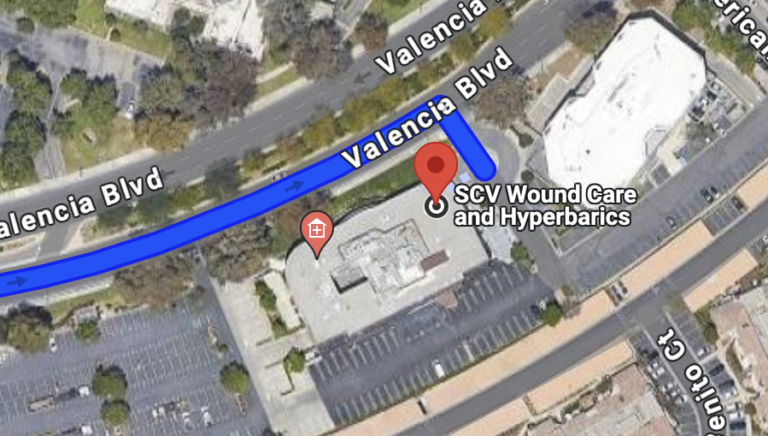
At SCV Wound Care and Hyperbarics, located at 23838 Valencia Blvd, Suite 100, our physician-led team provides advanced clinical protocols designed to break this cycle of tissue stagnation right here in the Santa Clarita Valley. Central to our comprehensive wound management strategy is serial weekly debridement. By evaluating and cleansing the wound bed on a consistent weekly cadence using the most appropriate debridement modality for each individual patient, we systematically convert stalled, chronic wounds back into dynamic, healing acute wounds.
The Pathophysiology of the Stalled Wound: Why Debridement is Essential
To understand why consistent, weekly debridement is essential for chronic wound healing, it is necessary to examine the microscopic differences between an acute wound and a chronic, non-healing ulcer.
When healthy tissue experiences acute injury, the body initiates a tightly orchestrated four-stage healing sequence: hemostasis, inflammation, proliferation, and remodeling. In a healthy host, the inflammatory phase resolves within days, clearing space for new capillary networks (angiogenesis) and healthy granulation tissue.
In chronic wounds—such as diabetic foot ulcers, venous stasis ulcers, and arterial ulcers—this process breaks down, locking the wound bed in a state of severe chronic inflammation. This breakdown is driven by three main pathophysiological factors:
1. Necrotic Tissue and Slough
As cells die due to ischemia, trauma, or pressure, they form necrotic tissue (eschar) and devitalized proteinaceous material (slough). This dead tissue serves zero biological utility; instead, it acts as a physical barrier that prevents healthy epithelial cells from migrating across the wound margins. Furthermore, non-viable tissue releases pro-inflammatory cytokines that continuously signal the immune system to send white blood cells, maintaining high levels of tissue-destroying enzymes known as matrix metalloproteinases (MMPs).
2. Senescent Cells (“Zombie” Cells)
At the margins of a chronic wound, the residing fibroblasts and keratinocytes often become phenotypically senescent. Although these cells remain alive, they have lost their capacity to divide, proliferate, or synthesize crucial extracellular matrix components like collagen. They remain unresponsive to endogenously produced growth factors, essentially acting as “zombie” cells that clutter the wound bed and block healthy cellular proliferation.
3. Bacterial Biofilm Architecture
Up to 80% of chronic non-healing wounds harbor bacterial biofilms—complex, highly organized communities of microorganisms encased within a self-produced extracellular polymeric substance (EPS) matrix. This protective matrix acts as a physical shield, rendering the bacteria up to 1,000 times more resistant to systemic oral or intravenous antibiotics and standard topical antiseptics. Biofilms continuously shed planktonic bacteria, triggering localized immune responses that further destroy newly formed extracellular matrix.
Standard systemic therapy or topical cleansers cannot break down this complex bio-structural barrier on their own. Regular, weekly debridement is required to disrupt this environment and reset the cellular landscape.
Tailored Care: Exploring the Modalities of Debridement
Debridement is not a one-size-fits-all procedure. At SCV Wound Care and Hyperbarics, our physician led team will carefully evaluate the wound bed, vascular status, patient pain tolerance, and overall health goals at every visit to determine the safest and most effective method of tissue removal.
Depending on your clinical presentation, your personalized care plan may utilize one or a combination of the following advanced debridement modalities:
1. Surgical Debridement
Surgical debridement involves the precise, selective removal of devitalized tissue, thick slough, and adherent eschar down to viable, healthy margins using sterile instruments (such as curettes or scalpels) under local anesthesia.
When It’s Used: Surgical debridement is the most rapid, efficient method for removing heavy necrotic burdens, controlling localized infection, and breaking open resistant bacterial biofilms.
Key Advantage: Immediately converts a chronic, stalled wound floor into an active, bleeding tissue bed capable of responding to advanced cellular therapies or hyperbaric oxygen treatment.
2. Enzymatic Debridement (e.g., Collagenase Santyl)
Enzymatic debridement relies on topically applied biological agents, most notably FDA-approved Collagenase Santyl Ointment. Santyl specifically targets and digests the denatured collagen strands that anchor dead tissue to the bottom of the wound, leaving healthy collagen intact.
When It’s Used: Highly effective for daily home application between office visits, for patients with severe pain sensitivity, for those in palliative care, or when transportation challenges limit weekly clinic visits.
Key Advantage: Provides painless, continuous 24-hour tissue breakdown without physical trauma to fragile underlying capillaries.
3. Autolytic Debridement
Autolytic debridement harnesses the body’s natural enzymes and moisture balance to liquefy non-viable tissue. This is achieved by applying specialized moisture-retentive functional dressings—such as hydrogels, hydrocolloids, or alginates—that maintain an optimal healing environment.
When It’s Used: Ideal for low-exudate, painless wounds with minimal slough, or as a secondary maintenance strategy once heavy eschar has been cleared.
Key Advantage: Highly selective, completely painless, and easily integrated into routine home dressing changes.
4. Mechanical Debridement
Mechanical debridement physically loosens and removes unattached debris and surface biofilm using specialized wound irrigation systems, low-frequency ultrasound, or specialized micro-monofilament polyester pads.
When It’s Used: Frequently utilized during routine weekly wound hygiene to clear loose bioburden and superficial debris prior to applying advanced dressings.
Key Advantage: Gentle on sensitive tissue while providing thorough surface cleansing.
The Peer-Reviewed Science: Why Weekly Frequency Matters
Regardless of which specific debridement method is selected, clinical literature overwhelmingly proves that the frequency of care is a primary driver of successful closure.
Impact of Debridement Frequency on Healing Rates: A landmark retrospective cohort study evaluating 312,744 chronic wounds across the United States demonstrated a direct, statistically significant correlation between debridement frequency and time to complete wound closure. Wounds evaluated and debrided on a weekly cadence achieved a 70.8% median healing rate and closed significantly faster compared to wounds treated sporadically. Review the complete study details on the NIH PubMed Repository (PMID: 23884238).
Disruption of Microbial Biofilms: International consensus guidelines on chronic wound bioburden confirm that bacterial communities rebuild their protective matrix within 48 to 72 hours after being cleared. Consistent weekly intervention continuously disrupts this cycle, preventing bacteria from maturing into antibiotic-resistant colonies. Explore the consensus guidelines on the NIH PubMed Repository (PMID: 28960634) or view full-text access via the NIH PMC Free Journal Archive (PMC8439557).
Preparing the Bed for Advanced Therapies: Clinical literature on Wound Bed Preparation demonstrates that advanced modalities—such as bioengineered skin substitutes or hyperbaric oxygen therapy—achieve maximum therapeutic success only when applied to an optimized wound bed cleared of necrotic tissue, excess exudate, and elevated matrix metalloproteinases (MMPs). Read the clinical principles on the NIH PMC Free Journal Archive (PMC7982138) or NIH PubMed Repository (PMID: 33739948).
What to Expect During Your Weekly Visit in Valencia
At SCV Wound Care and Hyperbarics, patient comfort, safety, and precise clinical execution are our top priorities. Your weekly visit is a comprehensive clinical assessment designed to monitor progress and adapt your treatment plan in real time:
Detailed Measurement & Assessment: Our clinical team measures wound length, width, depth, and edge tissue health to track precise weekly surface area reductions.
Tailored Debridement Selection: Your physician assesses the wound each visit to determine the optimal debridement method for that specific day—whether performing gentle surgical clearing, adjusting an enzymatic Santyl regimen, or applying specialized autolytic dressings.
Advanced Dressing Application: The clean wound bed is treated with tailored functional dressings (collagen matrices, alginates, silver antimicrobials, or negative pressure therapy) to maintain the ideal moisture environment until your next visit.
Dedicated Specialty Wound Care for the Santa Clarita Valley
Managing a complex, non-healing wound requires consistent medical oversight. For residents of the Santa Clarita Valley, driving over the Newhall Pass into downtown Los Angeles or navigating crowded regional hospital centers adds unnecessary physical stress and friction to recovery.
SCV Wound Care and Hyperbarics brings hospital-grade, physician-led wound care directly to your neighborhood. Located conveniently on Valencia Blvd, our clinic serves patients throughout the entirety of the Santa Clarita Valley, providing accessible care for residents in:
Valencia
Stevenson Ranch
Saugus
Newhall
Canyon Country
Castaic
Acton
Our medical team coordinates seamlessly with your primary care physician, podiatrist, vascular surgeon, or home health agency to ensure a unified, supportive recovery plan.
Restart Your Wound Healing Journey Today
A chronic, non-healing wound is a progressive condition, but it is highly responsive to modern, evidence-based care. Whether your treatment plan requires gentle surgical intervention, continuous enzymatic therapy with Santyl, or advanced autolytic dressings, our clinical team is dedicated to restoring your tissue health safely and comfortably.
If you or a loved one are managing a diabetic foot ulcer, venous leg ulcer, pressure injury, or non-healing surgical incision, do not allow devitalized tissue and biofilm to stall your recovery.
Contact our specialist team today to schedule a comprehensive wound evaluation.
SCV Wound Care and Hyperbarics
23838 Valencia Blvd, Suite 100, Valencia, CA
Explore our full range of advanced wound modalities and view our clinical facility artwork at scvwoundcare.com.