For millions of adults managing chronic venous disease, a minor scratch, insect bite, or localized skin discoloration on the lower leg can escalate into a painful, non-healing open wound: a Venous Stasis Ulcer (VSU). Accounting for up to 80% of all lower-extremity ulcerations, venous ulcers represent a challenging, recurrent complication of progressive vascular insufficiency.
When a venous ulcer fails to close, standard Band-Aids, topical antibiotic ointments, and passive dressings are fundamentally insufficient. The failure to heal is rarely due to a simple surface issue; rather, it is a structural and hemodynamic crisis occurring deep within the venous architecture of the leg. Without addressing the underlying fluid pressure—known clinically as venous hypertension—the delicate skin of the lower leg remains trapped in a state of ongoing breakdown.
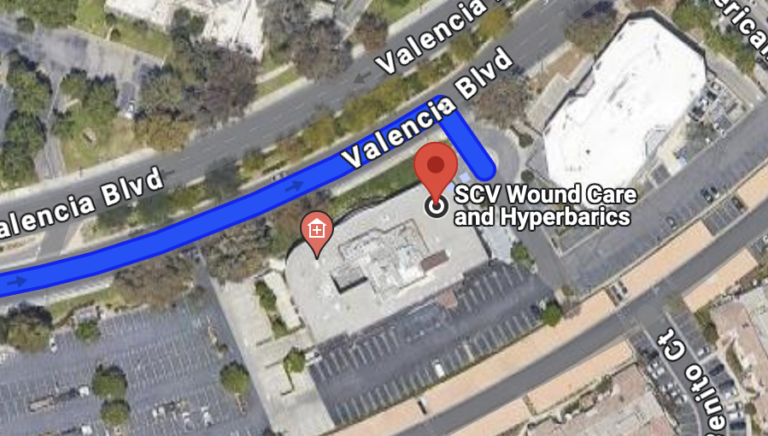
At SCV Wound Care and Hyperbarics, located at 23838 Valencia Blvd, Suite 100, we provide advanced, physician-led clinical protocols designed to correct this underlying vascular strain right here in the Santa Clarita Valley. Utilizing the state-of-the-art UrgoK2™ Dual-Compression System, we deliver the clinical gold standard in continuous, dual-layer compression therapy. This continuous pressure system controls edema, restores venous return, and creates the ideal biological environment necessary to achieve rapid, durable wound closure.
The Underlying Vascular Crisis: Why Venous Stasis Ulcers Develop
To understand why a venous ulcer forms and persists, it is essential to examine how blood travels back to the heart from the lower extremities against gravity. Healthy leg veins rely on a series of tiny, one-way bicuspid valves working in tandem with the surrounding calf muscles—a mechanism known as the calf muscle pump.
When you walk, the contraction of your calf muscles squeezes the deep veins, pushing blood upward toward the heart, while the one-way valves close to prevent gravity from pulling blood back down toward the ankle.
However, in patients with Chronic Venous Insufficiency (CVI), these delicate valves become stretched, damaged, or incompetent. This valve failure initiates a progressive physiological cascade:
Venous Reflux and Pooling: Instead of flowing cleanly upward, blood leaks backward and pools in the deep and superficial veins of the lower leg.
Ambulatory Venous Hypertension: The continuous pooling creates high hydrostatic pressure inside the vein walls, particularly around the inner ankle (the gaiter area).
Capillary Leakage and Fibrin Cuffing: Elevated pressure forces fluid, red blood cells, and large proteins out of the capillaries and into the surrounding subcutaneous tissue. Red blood cells break down, staining the skin a characteristic rusty brown (hemosiderin staining), while fluid accumulation leads to severe, painful swelling (edema).
Tissue Hypoxia and Breakdown: The surrounding skin becomes fibrotic, tight, and starves for oxygen. Under this intense pressure, even minor skin trauma causes the fragile tissue to disintegrate, creating a shallow, painful, and heavily draining venous ulcer.
Because the underlying cause is continuous internal fluid pressure, topical wound care products alone cannot heal a venous stasis ulcer. The continuous external pressure must be mechanically counteracted from the outside—a process known as compression therapy.
The Gold Standard Clinical Solution: Dual-Action Offloading via UrgoK2™
International clinical practice guidelines universally recognize sustained, multi-layer compression therapy as the foundational treatment for non-complicated venous stasis ulcers. Compression works by squeezing the dilated leg veins, bringing the floppy valve leaflets back together, reducing capillary leakage, and driving pooled fluid out of the leg back into the lymphatic system.
However, traditional single-layer elastic bandages or basic compression socks present significant drawbacks. Single-layer wraps often lose their therapeutic pressure within hours, slipping down the calf, while standard elastic stockings can be difficult for patients to put on over open, draining wounds.
To solve these clinical challenges, SCV Wound Care and Hyperbarics utilizes the advanced UrgoK2™ System—a specialized, multi-layer compression system designed to deliver continuous, controlled pressure over extended periods.
The UrgoK2™ system relies on a unique PresSytem technology, combining two distinct, synergistic layers to achieve maximum therapeutic efficiency:
Layer 1: KTECH (Short-Stretch/Inelastic Layer)
The first layer consists of a padded, short-stretch wadding material applied directly over the primary wound dressing. This layer provides low pressure when the leg is at rest, but creates a rigid, supportive matrix against the calf muscle when the patient walks. As the calf muscle expands against this firm wall during movement, it generates high working pressure, boosting the calf muscle pump and forcing pooled venous blood out of the leg.
Layer 2: KPRESS (Long-Stretch/Elastic Layer)
The second layer is a cohesive, elastic outer wrap applied over the KTECH layer. This component provides continuous resting pressure, ensuring that steady compression is maintained even when the patient is sitting or lying down. The cohesive material sticks to itself—not to the patient’s skin—preventing the bandage system from slipping down the leg throughout the week.
The PresSystem Advantage
One of the most critical challenges in traditional compression therapy is achieving precise, consistent pressure without wrapping the leg too tightly or too loosely. The UrgoK2™ system features patented visual pressure indicators printed directly on the material. As the clinician applies the wrap, pre-printed oval patterns stretch into perfect circles when the exact target therapeutic pressure (approximately 40 mmHg at the ankle) is reached. This removes guesswork, ensuring safe, consistent, and reproducible compression at every application.
The Peer-Reviewed Evidence: What the Science Says
The integration of multi-layer compression therapy into chronic venous ulcer management is supported by extensive peer-reviewed medical research and randomized controlled trials.
Superiority of Multi-Layer Systems: A comprehensive systematic review published in the Cochrane Database of Systematic Reviews evaluated dozens of clinical trials comparing compression strategies for venous leg ulcers. The meta-analysis concluded that multi-component compression systems (such as multi-layer elastomeric bandages or two-component systems) are significantly more effective than single-component or non-elastic bandages. Multi-layer systems achieve substantially higher complete healing rates and a faster median time to wound closure by sustaining high working pressures and lower resting pressures.
Evidence: Cochrane Review: Compression for Venous Leg Ulcers (PubMed ID: 23152202)
Clinical Validation of Dual-Compression Systems (UrgoK2™): Prospective, multi-center randomized controlled trials directly comparing two-layer dual-compression systems (such as UrgoK2™) against traditional, bulkier four-layer bandages (4LB) demonstrate that two-layer systems achieve equivalent high wound-closure rates. Furthermore, the two-layer system offers superior ease of application, significantly reduced bulk, better slippage resistance, and higher patient comfort and quality-of-life scores.
Evidence: VenUS IV Trial: Compression Hosiery vs. Compression Bandages (PubMed ID: 24315520)
- Full Text Access: VenUS 6 Trial & Multi-Layer Compression Analysis (PMC10223923)
Customized Pressure-Guided Elastic Bandages: Clinical evaluations assessing elliptical/oval ink markers that expand into circles upon reaching optimal elongation demonstrate a significant reduction in inter-applicator variability and a higher rate of achieving the target 35–45 mmHg ankle interface pressure compared to standard non-guided bandages.
Evidence: Use of Customised Pressure-Guided Elastic Bandages (PMID: 27502619)
Two-Layer Bandage Systems & Hemodynamics (UrgoK2 / PresSure System): Advanced imaging studies examine two-layer compression systems utilizing visual force-indicator anagrams (ovals transforming to circles) to achieve standardized sub-bandage pressures and optimize lower-limb hemodynamic responses.
Evidence: Haemodynamic Effect of Leg Compression Bandaging (PMC11211091)
What to Expect During Your UrgoK2™ Treatment Plan
At SCV Wound Care and Hyperbarics, our primary goal is to ensure your vascular recovery plan is safe, comfortable, and tailored to your specific anatomy.
1. Comprehensive Vascular Assessment
Before applying any compression therapy system, our clinical team conducts a thorough vascular evaluation. This includes checking peripheral pulses and performing an Ankle-Brachial Index (ABI) assessment using Doppler ultrasound. This step is critical to confirm that your arterial blood flow is healthy and that high-level compression can be safely applied without restricting arterial supply.
2. Application and Care Protocol
Once cleared, our clinical staff cleanses the ulcerated area, performs any necessary sharp debridement to clear non-viable tissue, and places a primary, highly absorbent wound dressing to manage drainage. The UrgoK2™ two-layer system is then carefully wrapped from the base of the toes to just below the knee, utilizing the visual PresSystem indicators to lock in exact therapeutic pressure.
3. Weekly Maintenance
The UrgoK2™ system is engineered to remain comfortably in place for up to 7 days. You will return to our Valencia clinic weekly, where our clinical team will safely remove the wrap, measure wound healing progress, clean the area, and reapply a fresh system. Most patients notice an immediate, significant reduction in lower-leg aching, heaviness, and swelling within the first few days of application.
Dedicated Venous Ulcer Wound Care for the Santa Clarita Valley
Managing a persistent, draining venous stasis ulcer requires consistent, multi-week specialty medical care. For residents of the Santa Clarita Valley, driving into central Los Angeles or navigating busy regional medical centers for weekly bandage changes adds unnecessary physical discomfort and administrative friction to your recovery.
SCV Wound Care and Hyperbarics brings world-class, hospital-grade specialty wound management directly to your neighborhood. Located conveniently on Valencia Blvd, our clinic serves patients throughout the entire Santa Clarita Valley, providing local access to care for residents in:
Valencia
Stevenson Ranch
Saugus
Newhall
Canyon Country
Castaic
Acton
Our medical team coordinates directly with your primary care provider, cardiologist, vascular specialist, or home health agency to ensure a seamless treatment plan, handling insurance pre-authorizations, custom wrap modifications, and ongoing progress updates.
Reclaim Your Comfort and Mobility
A chronic venous stasis ulcer is a progressive condition, but it is highly responsive to modern, evidence-based compression technology. If you or a loved one are living with swollen lower legs, skin discoloration, or an open, draining sore near the ankle, do not wait for complications to worsen.
Contact our specialist medical team today to schedule a comprehensive lower-extremity wound evaluation. Let us help you eliminate lower-leg edema, relieve chronic pain, and achieve lasting wound closure using the advanced UrgoK2™ system.
SCV Wound Care and Hyperbarics
23838 Valencia Blvd, Suite 100, Valencia, CA
Explore our complete range of advanced wound care modalities and view our clinical facility at scvwoundcare.com.